
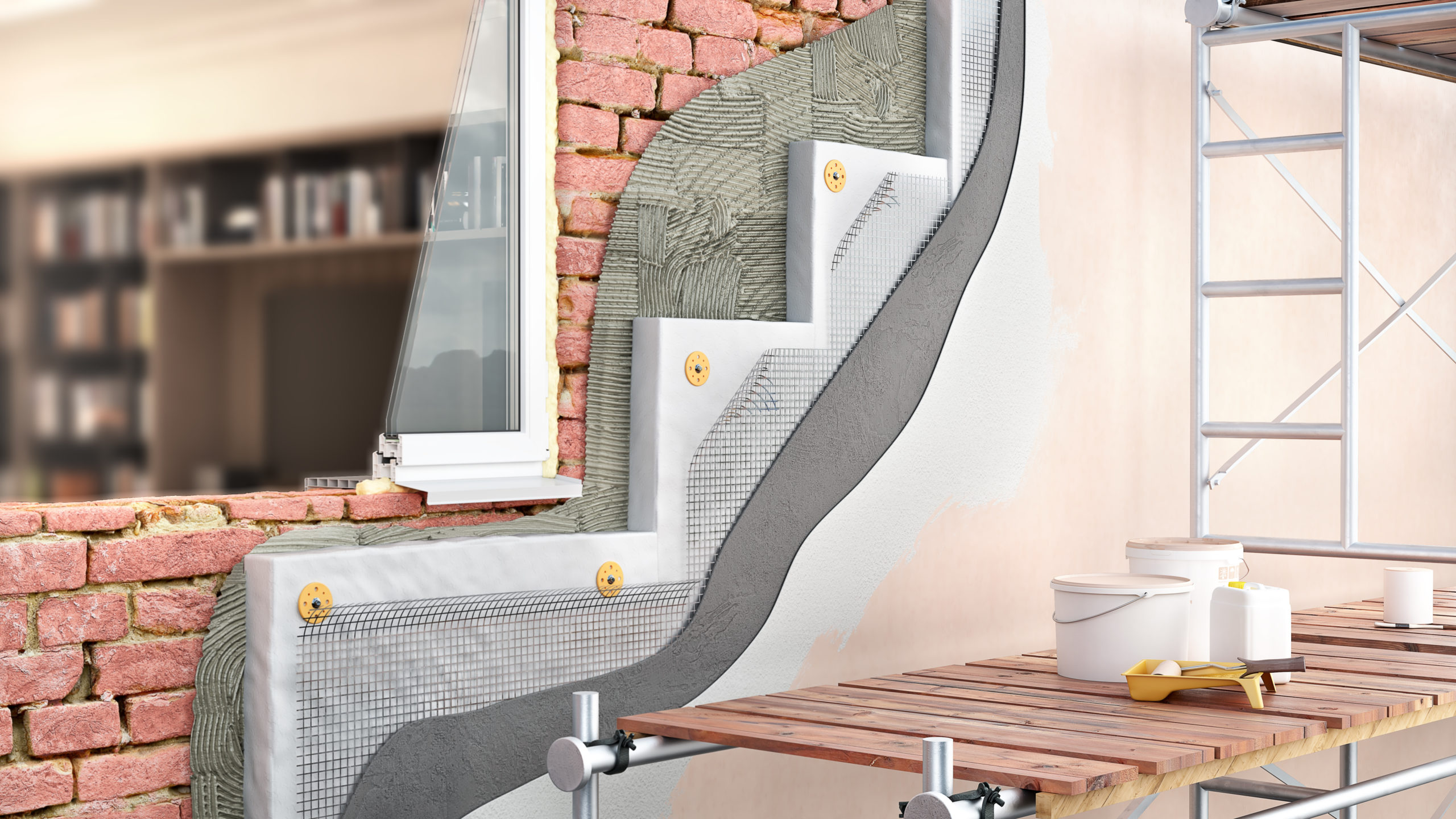
If you own a listed property, you may be wondering: is external wall insulation suitable for listed buildings? Improving energy efficiency in older homes is a growing priority across the UK, but listed buildings come with added responsibilities.
The short answer is: sometimes — but it depends entirely on the building, its historic significance, and whether the work can be carried out in a way that protects its character. Alterations that affect a listed building’s special architectural or historic interest usually require listed building consent, and councils assess proposals case by case.
In this guide, we’ll explain:
- Why listed buildings are more complex to modify
- Planning and heritage rules you need to consider
- What types of external wall insulation may be suitable
- The benefits and risks involved
- What steps to take before making any decisions
If you’re considering insulation for a listed home, it’s important to understand the rules before any work begins.
Why Are Listed Buildings More Challenging to Modify?
Listed buildings are protected because of their special architectural or historic interest. That means even improvements that seem practical from a modern housing point of view can raise concerns if they alter the appearance or fabric of the property. Councils make clear that works affecting the character of a listed building can require formal consent, even where the changes might seem minor from a homeowner’s point of view.
External wall insulation changes the outside of a building. In many cases, it adds thickness to the walls and requires a new finish over the original surface. That can affect:
- The appearance of brick, stone, or render
- Architectural details around windows, doors, and rooflines
- The character of the façade
- Historic building materials and how they perform
This is why listed properties require a much more careful approach than standard homes.
Myth: You can never install external wall insulation on a listed building.
Truth: In some cases, it may be possible — but only where it is appropriate for the property and has the necessary permissions.
Fact: Every listed building is different, and suitability must be judged on a case-by-case basis. Local planning authorities and heritage guidance both stress that energy-efficiency upgrades to historic homes need careful assessment rather than a one-size-fits-all approach.
Common Homeowner Concerns About Insulating Listed Properties
Owners of period and heritage homes often face a difficult balance between improving comfort and preserving the building.
Here are some common concerns:
- “Will I be allowed to change the outside of the building?”
- “Will insulation damage the original walls?”
- “Could I lose historic features?”
- “Are there systems designed for older buildings?”
- “Will energy improvements reduce the property’s character or value?”
These are valid concerns. Listed buildings need tailored solutions, not standard insulation approaches.
If you’re still weighing up the basics of how EWI works, our guide is a useful starting point.
Regulations and Permissions: What You Need to Know
One of the biggest issues with listed buildings is that you usually cannot make external alterations without approval. District Councils state that you must apply for listed building consent if you want to alter, extend, or demolish a listed building fully or in part, while wider government guidance confirms that listed building consent is central to heritage-related improvements.
Depending on the property and the proposed work, you may need:
Listed Building Consent
This is often required for works that affect the character of a listed building, including changes to external walls and finishes. See Teignbridge’s listed building advice.
Planning Permission
In some cases, planning approval may also be needed, particularly if the property is in a conservation area or the changes affect the external appearance significantly. Exeter City Council notes that properties in conservation areas may need permission for exterior changes.
Input from Conservation Officers
Your local authority may involve a conservation officer to assess whether the proposed insulation is appropriate and how it may impact the building.
The exact requirements vary depending on the grade of listing, the building type, and the scope of the work. That is why professional advice is essential before committing to any insulation plan. For a broader overview of when permission may be needed for insulation work, see our article on planning permission for external wall insulation. Therm-Eco’s own guidance notes that listed properties and conservation areas often need extra checks before work starts.
Why a Professional Survey Matters
Before considering any external wall insulation system for a listed building, a specialist survey should always come first.
This survey should assess:
- The wall construction and existing materials
- The condition of the masonry or render
- Any existing moisture, damp, or structural issues
- The historical importance of the exterior
- Whether the building needs to remain vapour permeable
- How insulation could affect details such as eaves, sills, reveals, and decorative features
A listed property should never be treated like a standard retrofit project. What works well on a modern rendered house may be completely unsuitable for a heritage building. Government-backed review work on adapting historic homes also points to the need for careful, tailored decision-making when improving energy efficiency in historic buildings.
If you own an older solid-wall property, you may also find our guide on ‘insulating single-brick old house walls’ helpful, as it explains some of the practical considerations involved with older building types.
EWI Options for Listed Buildings
Where external wall insulation is considered appropriate, the system usually needs to be carefully selected to work with the property rather than against it. Therm-Eco notes that every project is individually assessed to determine which system and method will give the highest thermal performance while meeting the needs of the building.
1. Slimline Insulation Systems
In some situations, slimline systems may be considered where minimising the change to the building’s profile is important.
These systems can help reduce the visual impact by limiting how far the new finish projects from the original wall. This can be particularly important around:
- Window and door reveals
- Roof edges and gutters
- Decorative trims and features
Slimline solutions may not achieve the same thermal performance as thicker systems, but they can sometimes offer a compromise between energy improvement and heritage sensitivity.
2. Breathable Materials
Older buildings often rely on breathable construction methods. Traditional materials such as lime mortar, stone, and solid brickwork manage moisture differently from modern cavity walls.
That means breathable insulation systems are often a better fit for heritage properties. These may help allow moisture vapour to escape while still improving thermal performance.
Using non-breathable materials on the wrong type of wall can increase the risk of trapped moisture, which may lead to decay, cracking, or internal damp problems. That is one reason why historic-home retrofit guidance emphasises careful specification and suitability rather than applying standard modern solutions to older fabric.
3. Sympathetic Finishes
The finish applied over the insulation matters just as much as the insulation itself. On listed buildings, the goal is often to preserve or carefully replicate the original appearance as closely as possible.
This could include:
- Finishes that match traditional render styles
- Colours that reflect the existing character of the building
- Careful detailing around openings and corners
- Retention of important architectural features where possible
In some cases, the appearance of the front elevation may make EWI unsuitable, while side or rear elevations may offer more flexibility.
Benefits of External Wall Insulation for Listed Buildings
Where it is suitable and properly approved, external wall insulation can offer real benefits.
Improved Energy Efficiency
Many listed buildings have solid walls and poor thermal performance. External insulation can help reduce heat loss and improve the overall energy efficiency of the property. Therm-Eco’s guidance explains that EWI improves thermal efficiency, reduces heat loss, and can lower heating costs in suitable homes.
Greater Comfort
Older homes can often feel cold, draughty, and difficult to heat evenly. Insulating externally can help create more stable indoor temperatures and make rooms more comfortable throughout the year.
Reduced Condensation Risk
By keeping wall surfaces warmer, external wall insulation can help reduce condensation risk in some situations, especially when paired with appropriate ventilation. Therm-Eco also highlights that EWI can help reduce condensation when correctly designed and installed.
Protection for the Building Fabric
A well-designed external system can provide an extra protective layer against weather exposure, particularly where existing external finishes are already tired or vulnerable.
Risks and Considerations
The benefits need to be weighed carefully against the risks.
Loss of Historic Character
If insulation changes the appearance of the building too much, it may harm the very qualities that make the property significant. This is one of the main reasons permissions can be difficult to obtain. Heritage guidance consistently focuses on protecting significance, character, and appearance when assessing works to listed buildings.
Moisture Problems from Poor System Choice
Using the wrong materials on an older building can trap moisture within the wall structure. This is especially important in properties built with traditional, breathable materials.
Damage to Architectural Details
External insulation can cover or distort features such as brick patterns, stonework, cornices, reveals, and decorative trim if the design is not handled carefully.
Approval May Be Refused
Not every listed building is suitable for external wall insulation. In many cases, the appearance or historic value of the façade means consent may not be granted.
Benefits vs Risks: The Right Approach Matters
So, is external wall insulation suitable for listed buildings?
Sometimes yes — but only where the building, materials, design, and permissions all align.
The decision should never be based on energy savings alone. For listed properties, the right question is whether the insulation can improve comfort and performance without harming the building’s significance.
That means balancing:
- Energy efficiency
- Moisture management
- Visual impact
- Conservation requirements
- Long-term building health
With the right survey, materials, and professional input, some listed buildings can benefit from carefully designed insulation solutions. Without that process, the risks are too high.
For homeowners wanting trusted background reading, the Government’s review of adapting historic homes for energy efficiency is worth a look.
What Should You Do Next?
If you are considering external wall insulation for a listed property, these are the key steps to take:
1. Arrange a Specialist Survey
Start with a professional assessment of the building’s construction, condition, and suitability for insulation.
2. Speak to Your Local Authority Early
Do not assume the work will be allowed. Contact your local planning department or conservation team before progressing. Devon County Council’s historic environment team also advises seeking advice as early as possible on heritage matters.
3. Work With Heritage-Aware Professionals
Choose surveyors, designers, and installers who understand both insulation performance and traditional buildings. If you need a starting point, the Federation of Master Builders’ insulation guide offers useful homeowner guidance on planning insulation projects and working with experienced professionals.
4. Ask About Breathable, Low-Impact Solutions
Older properties often need systems designed specifically for solid walls and historic materials.
5. Consider the Whole Building
Insulation should be part of a wider strategy that also considers ventilation, moisture control, and preserving important features.